

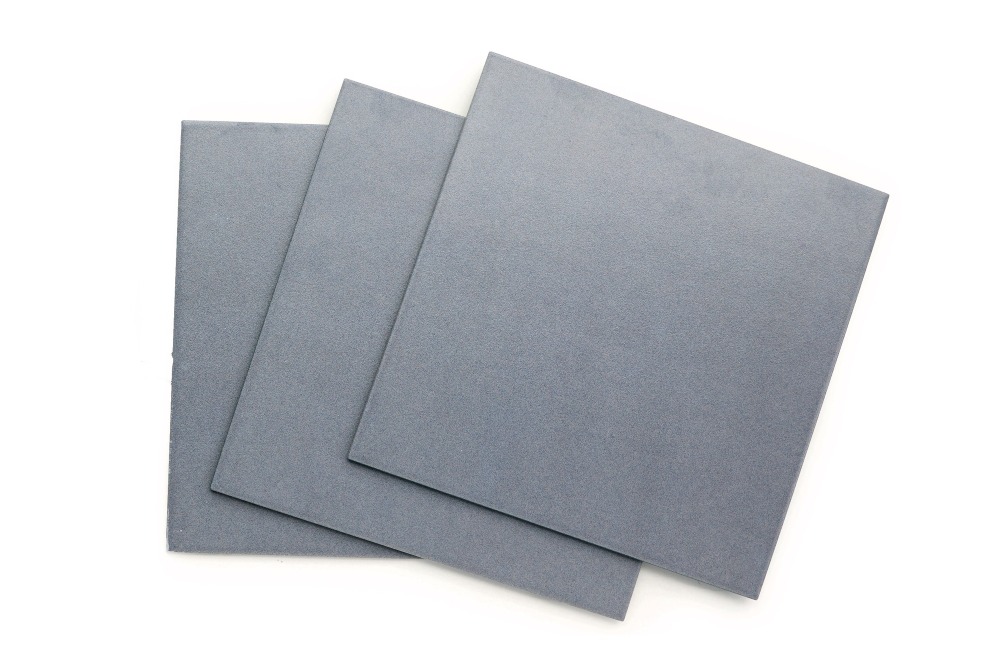
Industrial sealing systems often operate under combinations of heat, pressure, vibration, and chemical exposure. Under these conditions, the sealing material becomes an important part of equipment reliability. For procurement teams evaluating a Graphite Sheets Trader in Malkat, understanding the material itself can make specification and sourcing decisions considerably easier.
Graphite sheets are widely used as sealing materials because graphite can retain useful sealing characteristics across demanding operating conditions. Depending on the grade and construction, sheets may be used to fabricate gaskets for flanges, pumps, valves, pipelines, heat exchangers, and process equipment.
Why Graphite Sheets Are Used for Sealing
A sealing sheet needs to conform sufficiently to mating surfaces while maintaining integrity under operating conditions. Flexible graphite is particularly useful where conventional materials may become unsuitable because of elevated temperatures.
Common industrial advantages include:
- Good thermal resistance
- Compressibility for effective surface contact
- Recovery characteristics that support sealing
- Suitability for many industrial fluids
- Availability in different thicknesses and constructions
- Ability to be cut into application-specific gasket shapes
However, graphite sheet should not be selected on temperature alone. Pressure, media compatibility, flange condition, dimensions, and mechanical reinforcement can all influence performance.
Understand the Different Sheet Constructions
Procurement teams may encounter plain flexible graphite sheets as well as reinforced variants. Reinforcement may be selected when additional mechanical strength or handling stability is required.
Before placing an order, determine whether the application requires:
- Plain flexible graphite
- Reinforced graphite sheet
- A particular thickness
- Specific dimensions
- Defined density or other technical properties
- Sheets intended for gasket fabrication
The correct specification depends on where and how the material will be installed.
Consider the Actual Operating Environment
For manufacturing and maintenance operations around Malkat and other industrial areas of Maharashtra, replacement materials are often purchased during scheduled maintenance or equipment repair. Selecting a sheet merely because its dimensions match the old material can create avoidable problems.
Procurement managers should document:
- Maximum and normal operating temperature
- Operating pressure
- Fluid, gas, steam, or chemical being sealed
- Required sheet thickness
- Flange or equipment type
- Existing gasket specification
- Required quantity
If the existing sealing arrangement has repeatedly failed, simply purchasing an identical material may not address the underlying issue. Flange distortion, incorrect bolt loading, surface damage, or an unsuitable gasket specification may also contribute.
Storage and Handling Matter Too
Graphite sheets should be stored carefully to prevent unnecessary physical damage before fabrication or installation. Large sheets can be vulnerable to bending, edge damage, or contamination when handled poorly.
For industrial buyers, packaging therefore deserves attention alongside material specifications. This becomes particularly relevant when purchasing multiple sheets for inventory or supplying material across different production and maintenance departments.
A Better Approach to Procurement
When evaluating a Graphite Sheets Trader in Malkat, technical clarity should come before price comparison. Sending complete requirements allows the supplier to identify whether the requested material and construction are appropriate for the stated application.
Sujoy Enterprises works with industrial customers requiring graphite-based sealing materials for manufacturing and maintenance requirements. For procurement teams in Malkat, Maharashtra, a specification-led enquiry can help reduce confusion between visually similar products and ensure that quotations are compared on equivalent material requirements.
Ultimately, graphite sheet selection should be treated as an engineering procurement decision. Clear operating data, accurate dimensions, appropriate material construction, and proper handling provide a stronger foundation for reliable industrial sealing.


